
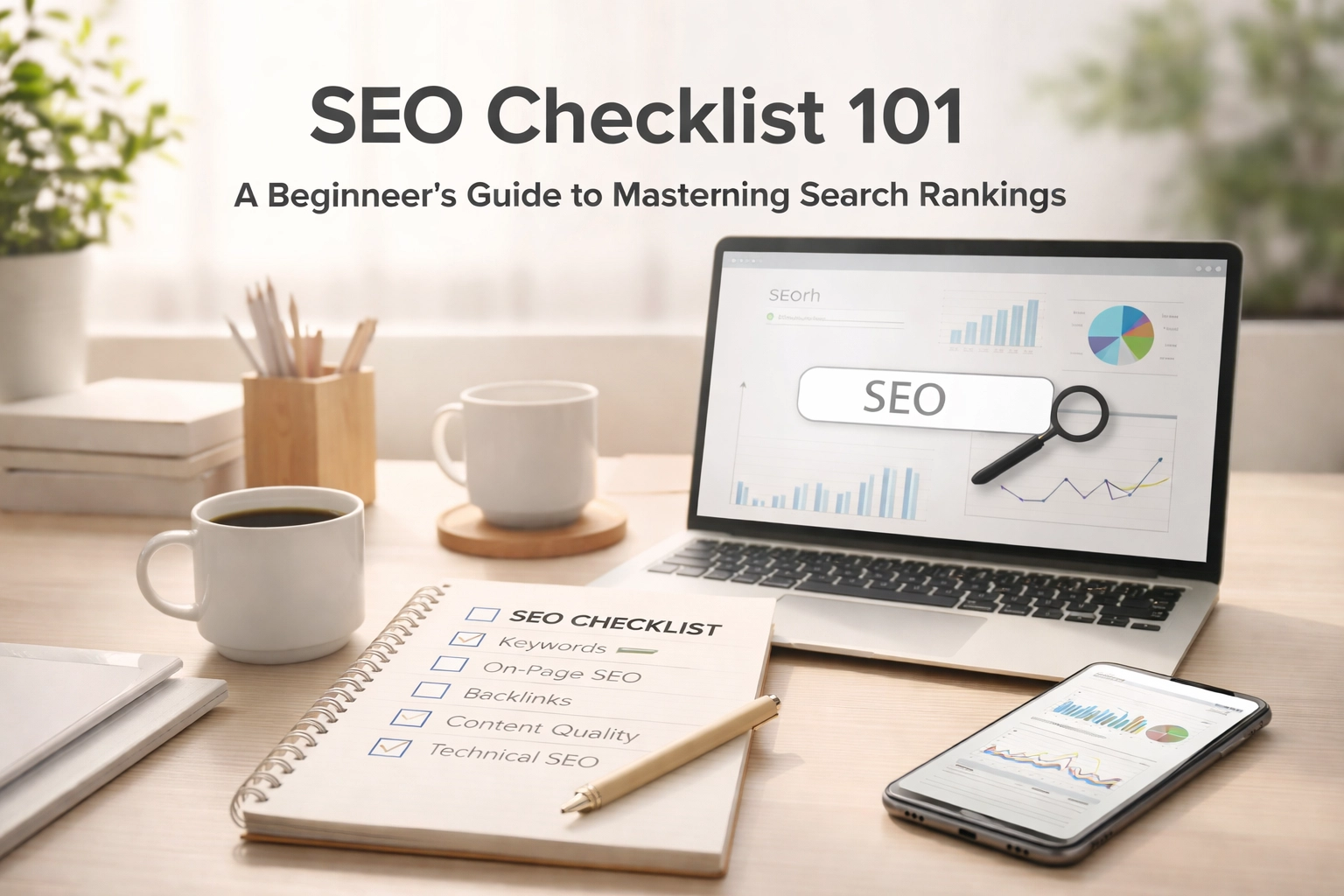
Let's be real: SEO can feel overwhelming when you're just getting started. Between algorithm updates, technical jargon, and endless "best practices," it's easy to feel paralyzed before you even begin.
But here's the thing: you don't need to be an expert to start seeing results. What you need is a clear, actionable SEO checklist that breaks everything down into manageable steps.
That's exactly what we're covering today. Whether you're a small business owner trying to get found online or a content creator looking to grow your audience, this guide will give you the foundation you need to start climbing those search rankings.
Why You Need an SEO Checklist
Search engine optimization isn't a one-and-done task. It's an ongoing process with multiple moving parts: technical setup, content creation, link building, and performance monitoring, to name a few.
Without a system, it's easy to miss critical steps or waste time on things that don't move the needle. A solid SEO checklist keeps you organized, focused, and consistent. And consistency? That's where the magic happens.
Think of it like building a house. You wouldn't start with the roof, right? You need a strong foundation first. The same principle applies to SEO.

Part 1: Setting Up Your Technical Foundation
Before you worry about keywords or content, you need to make sure search engines can actually find and understand your website. This technical foundation is non-negotiable.
Get Your Tools in Place
First things first: set up Google Search Console and Bing Webmaster Tools. These free tools let you:
- Monitor how your site performs in search results
- Submit your sitemap so search engines know what pages to index
- Identify crawl errors that might be holding you back
- See which keywords are driving traffic to your site
If you skip this step, you're essentially flying blind.
Secure Your Site with HTTPS
If your website URL starts with "http" instead of "https," you've got a problem. Google has confirmed that HTTPS is a ranking factor, and visitors are far less likely to trust (or stick around on) an unsecured site.
Most hosting providers offer free SSL certificates these days, so there's really no excuse to skip this one.
Create and Submit an XML Sitemap
Your XML sitemap is like a roadmap for search engines. It tells them which pages exist on your site and helps them crawl your content more efficiently.
A few quick tips:
- Only include pages you actually want indexed
- Keep the file under 50MB with no more than 50,000 URLs
- Update it whenever you add new content
Make Sure You're Mobile-Friendly
Over half of all web traffic comes from mobile devices. If your site doesn't work properly on phones and tablets, you're not just frustrating visitors: you're hurting your rankings.
Google uses mobile-first indexing, which means it primarily looks at the mobile version of your site when determining rankings. Test your site on multiple devices and fix any issues you find.

Part 2: On-Page Optimization Essentials
Once your technical foundation is solid, it's time to optimize the pages themselves. This is where your SEO checklist really starts to pay off.
Start with Keyword Research
Keywords are the bridge between what people are searching for and the content you create. Here's how to approach it:
- Identify seed keywords – These are broad terms related to your business or niche
- Analyze search intent – Is the searcher looking for information, trying to buy something, or comparing options?
- Check difficulty and volume – Target keywords you can realistically rank for while still attracting meaningful traffic
Free tools like Google's Keyword Planner or Ubersuggest can help you get started without spending a dime.
Optimize Your Title Tags and Meta Descriptions
Your title tag is one of the most important on-page SEO elements. It tells both search engines and users what your page is about.
Keep these tips in mind:
- Include your target keyword near the beginning
- Keep it under 60 characters so it doesn't get cut off in search results
- Make it compelling enough to earn clicks
Your meta description won't directly impact rankings, but it does influence click-through rates. Write a clear, engaging summary that makes people want to learn more.
Structure Your Content with Header Tags
Header tags (H1, H2, H3, etc.) help organize your content and make it easier for both readers and search engines to understand.
The rules are simple:
- Use one H1 per page (your main title)
- Use H2 tags for main sections
- Use H3-H6 for subsections
- Maintain a logical hierarchy throughout
Create Clean, Descriptive URLs
Your URLs should be short, readable, and include your target keyword when it makes sense. For example:
✅ yoursite.com/seo-checklist-beginners
❌ yoursite.com/post?id=12345&category=marketing
Use hyphens to separate words, and avoid unnecessary parameters or numbers.
Don't Forget Image Optimization
Images can slow down your site if they're not optimized properly. Compress your files, use descriptive file names, and always add alt text that explains what the image shows.
Alt text helps search engines understand your visual content and improves accessibility for visitors using screen readers.

Part 3: Creating Content That Ranks
Technical optimization gets you in the game, but content is what wins it. Search engines want to serve users the most helpful, relevant results: so that's exactly what you need to create.
Match Content to Search Intent
Before you write anything, ask yourself: what does the person searching this keyword actually want?
- Informational intent: They want to learn something (blog posts, guides, tutorials)
- Commercial intent: They're researching before buying (comparisons, reviews)
- Transactional intent: They're ready to purchase (product pages, pricing)
- Navigational intent: They're looking for a specific site or page
When your content matches the intent behind a search, you're far more likely to rank: and keep visitors on your page.
Focus on Quality Over Quantity
Gone are the days when you could stuff keywords into thin content and rank. Today's algorithms prioritize E-E-A-T: Experience, Expertise, Authoritativeness, and Trustworthiness.
What does that mean in practice?
- Share genuine insights and real-world experience
- Back up claims with credible sources
- Create comprehensive content that fully addresses the topic
- Update older content to keep it accurate and relevant
Build Internal Links
Internal linking connects your pages together and helps search engines understand your site structure. It also keeps visitors engaged longer by guiding them to related content.
Link contextually within your articles, connect parent and child pages, and make sure your most important pages are easily accessible from your navigation.
Check out our templates library for resources that can help you plan and organize your content strategy.
Part 4: Monitor, Measure, and Adjust
SEO isn't a set-it-and-forget-it game. You need to track your progress and adjust your strategy based on what's working (and what isn't).
Key Metrics to Watch
- Index coverage: Are your important pages being indexed?
- Core Web Vitals: How fast and smooth is the user experience?
- Organic traffic: Are more people finding you through search?
- Keyword rankings: Are you moving up for your target terms?
Google Search Console gives you most of this data for free. Make a habit of checking in at least once a week.
Conduct Regular Audits
Set a reminder to audit your site every few months. Look for broken links, outdated content, crawl errors, and pages that might be cannibalizing each other's rankings.
Small issues can compound over time, so catching them early keeps your SEO efforts on track.
Your SEO Journey Starts Now
Here's the truth about SEO: results don't happen overnight. It takes time for search engines to crawl, index, and rank your optimized pages. But the effort compounds: every improvement you make builds on the last.
The key is to start with a solid SEO checklist, take it one step at a time, and stay consistent. You don't need to do everything at once. Pick one section from this guide, implement it this week, and move on to the next.
You've got this. And if you need more resources to support your digital marketing journey, explore our ebooks and guides designed to help you grow with confidence.
Now go make some SEO magic happen.
Leave a Reply